






Tracked Spider Lift: Uses, Benefits, and Key Features
 adminJune 16, 20265 Mins read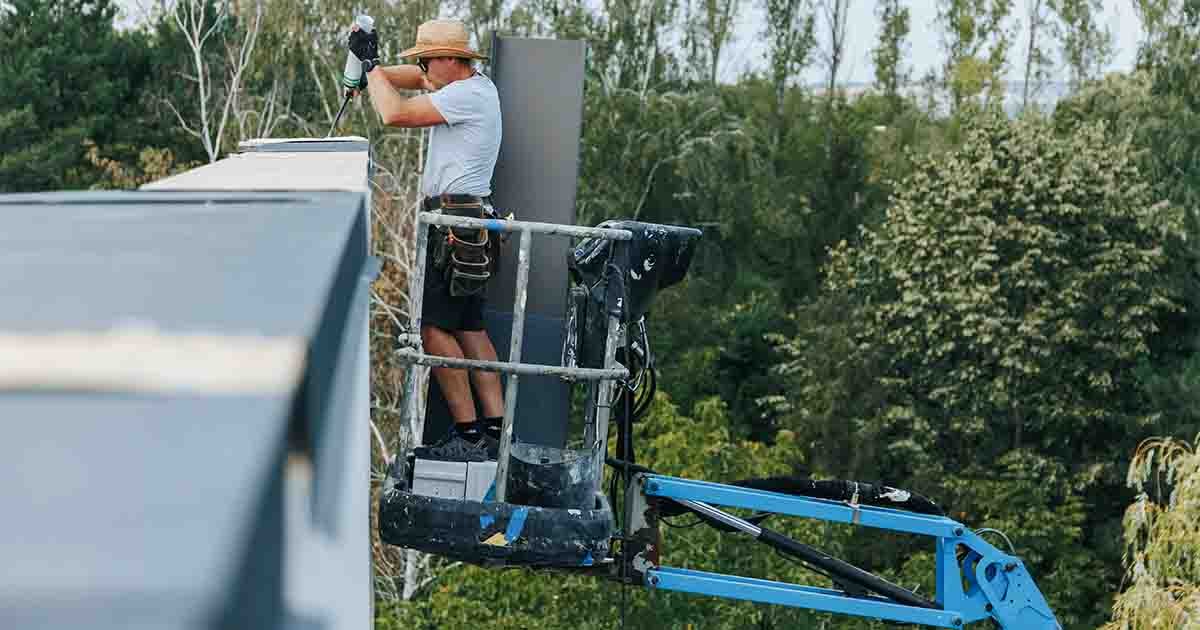
How Tracked Spider Lift Improve Safety on Sloped Sites
What does a Tracked Spider Lift Do?
The spider lift is a compact aerial work platform mounted on rubber tracks with extendable outriggers, which look like spider legs. It allows safe access to any area where large pieces of machinery cannot go. They are sometimes called Platform Spider Lifts or Spider Man Lifts, depending on your region. It gives you the ability to be mobile on lousy ground and gives accurate positioning.
Not all boom lifts need wide flat surfaces. Some will travel down a single path, go over uneven terrain, and may even work on low-pressure indoor floors. They are used by workers who need the reach of an elevated lift but also need to be able to move around in difficult locations.
How Does a Tracked Spider Lift Function?
Most of these lifts work with a base track, boom articulated or telescopic, and a platform for people and tools. The operator uses outriggers to stabilize the lift on slopes or uneven ground. There are many different models available in the market today. For example, the GCA66 by GLT Lifts comes with dual power – diesel for outdoor operation and electric for indoor operations or quiet area applications.
Once set up on a site, the tracks enable the lift to move over a host of soft surfaces-grass, gravel or sand-without leaving any mark on the surface. Once set up, the boom is extended to 360 degrees in most cases and the platform also turns for easier access. Most tracked spider lift come with safety features to ensure that no accident occurs. The safety features include load limits, which determine the maximum weight that should be allowed on the platform, and whether the outriggers are in contact with the ground; and tilt limits, so that the operator knows how far he or she can lean into the lift.
Advantages of Using Tracked Spider Lifts Compared to Other Types of Lifting Equipment
Another major benefit of tracked spider lifts is the ease with which they access confined or hard-to-reach areas. Most tracked spider lifts can fit through standard doorways or garden gates because of their narrow width. This cannot be possible with the standard truck mounted lifts as they have a greater width and, therefore, cannot fit through either the doorway opening or the garden gate. The other major benefit of using tracked spider lifts is the low ground pressure. This is important because most users are interested in protecting very delicate surfaces, such as lawns or historic flooring.
Tracked spider lifts work well on rough ground. They use adjustable outriggers and self-leveling technology to keep stable while working. Both of these help the user cut setup time a lot compared to how long it would take using old ways like making scaffolding or climbing ladders. Another plus point of using tracked spider lifts is dual power. Users can choose between running the lift with an electric motor indoors and no fumes or in sensitive environments; or they can operate outside using a diesel engine.
At the end of the day, many of these kinds of lifts are pretty light. Take the GCA66, for example. It weighs around 7600 lbs. — light enough to be hauled by small trailer setups and still able to reach a working height of 66 feet and support a maximum payload of 500 lbs.
Applications for Tracked Spider Lifts:
Tree care & arboriculture: Arborists make use of these lifts for tree pruning, tree removal, and routine maintenance inside residential yards or tight urban locations. The compact nature and traction of these lifts will allow the operator to position the platform directly adjacent to branches, minimizing damage to nearby plant material and property.
1. Building maintenance & facilities: Lifts are used by facility management teams to gain access to roofs, exterior walls/windows/roof tops, and other overhead structural elements within commercial buildings or warehouse/aerial spaces where there are space limitations such as ceiling height or excessive loading on the floor that restricts the use of larger aerial devices.
Construction and infrastructure Construction workers use the lifts for bridge inspection, electrical substation work, etc. in narrow alleyways. It allows fast project execution time in off-road environments due to the flexibility to establish positions in steep inclines/slopes or soft ground.
Painters, sign installers, and event technicians find that the precision and maneuverability offered by these types of lifts provide benefits beyond general lifting needs. Some models also come equipped with hoist capability enabling safer lifting and dropping heavy tools and materials.
Safety Features to Consider When Purchasing/Leasing a Tracked Spider Lift:
Load Moment Limiters: Tracked spider lifts of today come with load moment limiters that take the measurement of the weight placed on the platform and also control it in real time. The sensor technology that is built into the outriggers ensures stable contact before boom movement is allowed. They also have emergency stops and backup hand pumps as a secondary means of stopping when power is lost.
Determining Which Model Best Fits Your Needs
Operator Training
Modern Equipment:
No matter how advanced or safe a piece of modern equipment is, the operator will still need proper training—just like with all aerial lifts.
1. Working Height, Reach and Platform Capacity: Choose based on your operational demands. The GCA66 crawler boom lift by GLT Lifts is a great example as it has an approximate working height of 66 ft., a horizontal reach of 27ft., and will support 2 personnel/or tools up to 507 lbs. In addition, its small footprint —approximately 18.5ft when stowed — permits passage through tighter spaces than comparable sizes.
2. Power Source: Diesel Engine, Track Type: Rubber, Controls: Would wireless proportional controls help your operators? Check transport dimensions/weight as required.
Looking After Your Tracked Spider Lift:
1. Check hydraulic oil, tracks, and outriggers regularly for safety.
2. Park your tracked spider lift on firm ground when not in use.
3. Get more open space experience before you try tight space work.
Many manufacturers publish manuals and customer support information for replacement parts.
Service professionals in the tree care industry say that jobs completed in the backyards of residents take less time ever since compared to climbing or using larger boom style lifts. Building facility management staff admit that lower disruptions occur indoors when using smaller footprint equipment such as tracked spider lifts, leaving fewer scuff marks behind.
In many cases, a tracked spider lift can do the work of several jobs that used to be done with ladders or scaffolding.
Tracked spider lifts deal with access issues in places where traditional lifting solutions can’t reach. They are versatile, can work on any terrain, and come with many safety features, making them ideal for tree services, building maintenance, construction projects, and specialty tasks. Understanding their characteristics will help in selecting the right piece of equipment for each task and, consequently, will increase productivity.
No matter if it’s for daily tasks or rare jobs, the tracked spider lifts will not let you down and do not have extra size. Choose your work height, reach, and site limits to get the best use. To find out more about models that can work well under challenging conditions, look at the paperwork from makers or rental firms with long time in the field.






Related Articles

Crypto Recovery Expert in Asia: How to Choose the Right One
Crypto Recovery Expert in Asia: What They Really Do and How to...

Facebook Accounts for Sale: A Buyer’s Guide to the Risks
Facebook Accounts for Sale: The Practical Truth Before You Buy Introduction If...

DoHora: Free Thai Horoscope, Tarot & Astrology Guide
What Is DoHora? An Honest Look at the Free Horoscope Site Built...


Watch Movies Currently Showing in Theaters: A Guide
Watch Movies Currently Showing in Theaters: A Smart Moviegoer’s Guide Picking a...
Leave a comment